
Subscribe

Subscribe to hear about new talks, meetups, and the latest TEDxMelbourne News.
Thank you! Your submission has been received!
Oops! Something went wrong while submitting the form.
100% Spam-free. We promise.
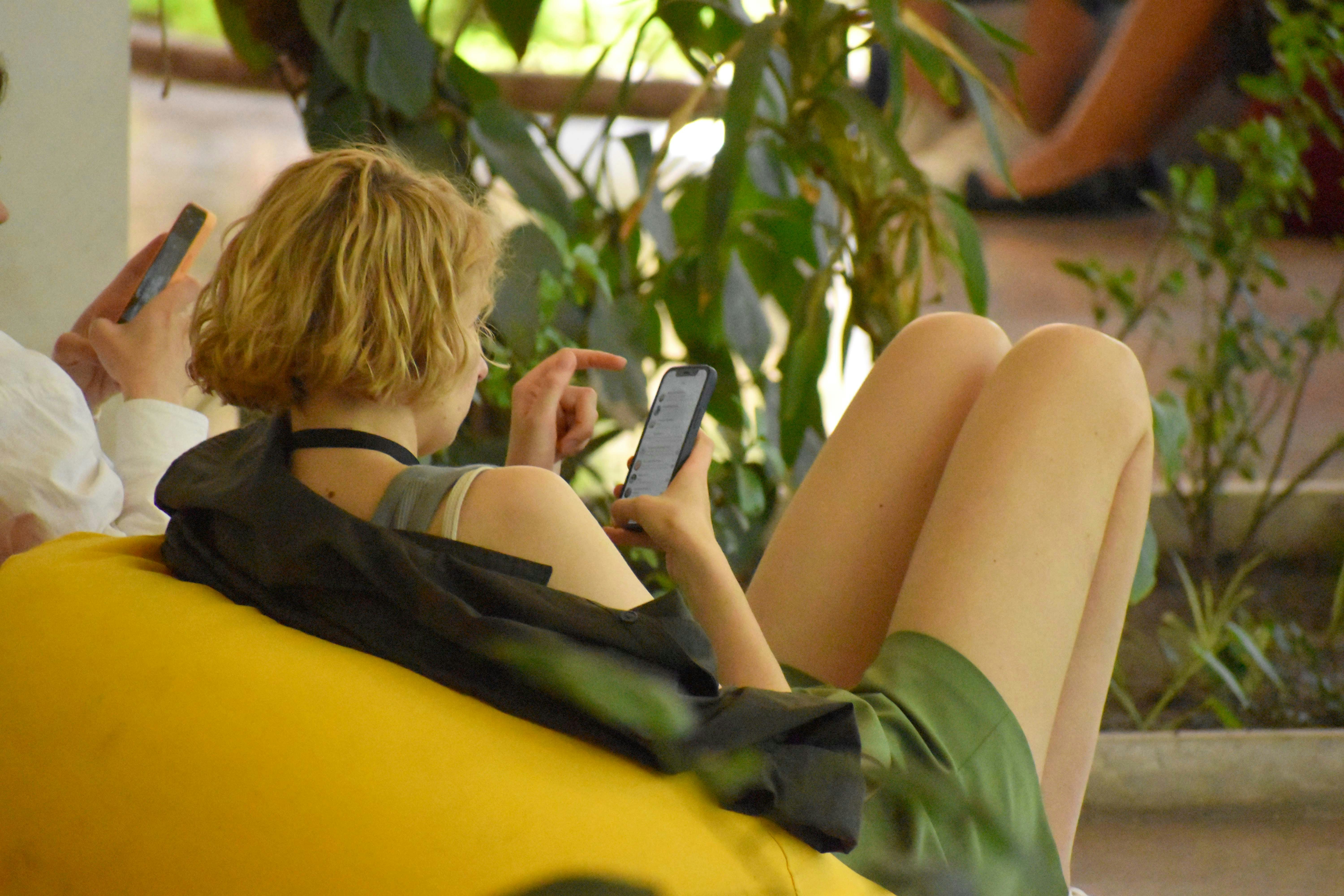
Have we made boredom obsolete? And are we ready to face the uncomfortable reality of what's replaced it?
I am shamelessly nostalgic and not afraid to admit, I miss Sundays. It was a day that felt like a blank piece of paper stretched out in front of you. Often spent watching bad music videos, flicking through the newspaper, or wearing a hangover in line for your special brunch spot. Sundays were slow. In hindsight, being bored sometimes was good for us, right? It kept the nervous system idling rather than in overdrive.
Of course, this rhythm naturally shifts and stirs as we age. Life admin, overdue catch-ups, and meal prep replace open hours. If you’re lucky, you might get your brunch delivered, via the very same handheld device now filling every remaining blank space. Exponentially.
Checking our phones is no longer a choice, it’s a reflex on autopilot. We all seem to have no say in the matter. The uncomfortable truth? Most of us now reach for our screens first thing Sunday morning, checking back over a hundred times that day to chase unpredictable hits of information for up to six hours in total.
The result? Sundays are fast and screen-induced tension headaches have replaced hangovers. We’re definitely not bored. Yet, ironically, we’ll likely see an ad for a headache remedy on the exact device causing it. We now seem to spend our weekends glued to our personal handheld slot machines. What happens when we stop looking up? What’s it costing us?
Every decade seems to have its defining brain-chemical moment. In the 1980s, we were made aware of the role of endorphins in reducing pain and enhancing mood. This was when jogging emerged as a cultural trend and Nike started advertising about the experience of a ‘runner’s high.’ Serotonin became the buzz-science term of the ‘90s, as ill-mental health became accepted as a chemical imbalance rather than a choice or weakness. The serotonin wave peaked in the early 2000s with the release of the film ‘Prozac Nation.’
You may have already guessed what the 2010’s have brought us … dopamine, the brain chemical responsible for reward. Again, we see a link between commerce and our understanding of neuroscience and mental health. This time, the chemical is linked to technology, rather than running shoes or Big Pharma.
Dopamine can be seen as the prelude to the runner’s high, it's the feeling of merely seeing the finish line that floods your brain with a feel-good spike. In reference to technology, it's not the finish line but the little red notification that someone has ‘commented,’ the thumb-tap of ‘adding-to-cart’ or the notion of swiping-right to find your other half.
Dopamine isn't just about the 'vibes' though. It influences memory, mood and concentration. But when we’re hit with hundreds of little dopamine spikes a day, that wiring starts to fray.
In their 2025 paper Dopamine-scrolling: a modern public health challenge requiring urgent attention, Sharpe and Spooner highlight how features such as autoplay, infinite feeds and reels can reinforce unhealthy psychological patterns.
When dopamine pathways are disrupted in this way, the effects on our minds can be similar to gambling or drug addiction. This is because the brain starts to reward the behaviour even before the actual activity is undertaken. A dangerous play when we’ve become accustomed to keeping our phones so close to us that they have morphed into wearables, now including glasses.
And then there’s doom-scrolling, the modern ritual of watching one bad news story after another, creating a seriously bleak outlook on the world. The dopamine loop is a different beast altogether, affecting our reward and reinforcement systems. Low-levels of dopamine have even been linked to ADHD symptoms, because when our brain’s reward system is impaired so too is our ability to stay attentive, keep focused and act rationally.
It seems like there is a whole area of exploration to be done here, with the rising case of late ADHD diagnosis in adults today. It could be a coincidence, but correlation with the advancement of smart phones feels like an important consideration in this cultural moment.
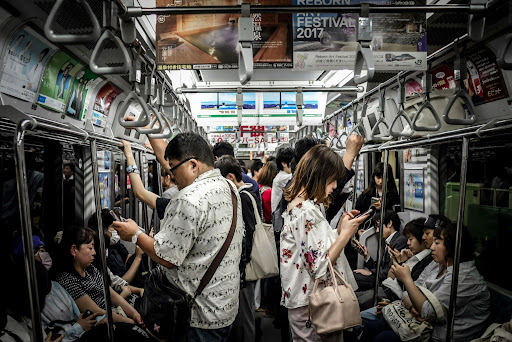
You wouldn’t carry a flask of alcohol at a bus stop or sit with it in your hands during your child’s swim lesson, yet endless scrolling is socially accepted everywhere. While alcohol consumption steadily drops under wellness culture and public policy, our phone addiction goes completely unchecked. Alcohol is acceptable under the cover of darkness, but smart phones are now a mainstay in literally all of our daily rituals. We’ve swapped occasional hangovers with something that’s taking up six hours of our attention, daily.
There has been a boom in new products in recent years, designed to keep our dopamine addictions in-check. There are apps that limit the interface of our smart phones and a growing market for ‘dumb phone’s.’ Landline phones are having a big comeback in households, and the emerging product that really has my mind blown is the ‘ghost phone.’
The ghost phone is literally a clear rectangle of perspex, designed to ‘mimic’ the form of a smart phone. Read that sentence again. I learnt about this item through a targeted ad. The product itself quite literally does nothing. In what universe are we buying into this? Apparently this one! The ghost phone is designed to emulate what methadone is for heroin users. A lesser imitation, in the same shape and weight, designed to replace the void of the OG drug. Dopamine.
A New Zealand expert in neuroscience, Alex Davids, talked about this shift in focus and attention-span in a podcast earlier this year. She believes that our decline in cognitive energy is a problem we can no longer ignore. She also sees the issue as being compounded by the feeling that we are in a fast-tracked race against AI technology.
This is a no win race according to her. Opting out is not a one-size -fits-all solution, it's a minimum. The expectation that we can focus for more than two hours at a time and still create meaningful output is just not what we're biologically designed to do.
So what is the solution then? TEDxMelbourne curator and speaking coach, Jon Yeo, believes we need to make intentional shifts, to counter the situation head-on. And often, some of his suggestions are obvious. Over lunch, he shares:
“We need to take notice of what we can do. Note when we are flat. Experiment with various breaks and sometimes that means going cold turkey and just … dealing with it”.
The conversation turns philosophical as he expands on how building new habits can take reflecting on your own identity.
“Ask yourself, who can you be at this moment and what can you sacrifice? Knowing the trade-off is being at your best 100% of the time.”
We talk about how the switch needs to be individualistic, so that could mean moving around every hour or even replacing your device with a plastic brick. Another recommendation is to intentionally look up and outside your window, to change your focal length.
Maybe it is about going back to the simple things, whatever they are for each of us, to break the ritual for good.

Last year I wrote an article about why the future is human. In the time since, this field of focusing on the human has become the 2026 buzz-topic. We talk about human-centered approaches to everyday life, as if this is something novel or innovative. If we’ve lost track of what it means to be human and need to constantly remind ourselves of the fact, something bigger than doom-scrolling and digital dopamine fixing is at play.
It signals that instead of celebrating empathy, kindness, generosity, compassion or self-reflection, we are applauding one another for focusing on the bare basics. Throwing around the label of our species, as if it's an innovation. Re-learning what it means to be human and if our future will cater for us, feels like something from the science-fiction category of my childhood library.
Yet here we are, trying to understand why we are all depressed, anxious and burnt-out, and finding out we may have had ADHD all along. Wondering if we can delay our children’s screen time until after breakfast, while we reach for the phone several times in the process of putting toast in the toaster.
In the coming months I’m going to trial Jon’s dopamine detox suggestions, unplugging the pokey machine from its socket and getting back to basics. This might mean following protocol for a day and forgetting the next. It might mean laying low on a Sunday, forced to fidget and listen to whatever music happens to be playing on the radio.
Hopefully, it means less digital dopamine loading and more simply… being. Maybe I’ll find more blank spaces to fill with my child. Maybe, just maybe, I’ll rediscover what it means to really be human again.

Bella Borello is a guest writer for TEDxMelbourne, and the Studio Director at Humans of Purpose. Humans of Purpose is a B-Corp content studio and community, partnering to help organisations with their growth.
Bella Borello is a guest writer for TEDxMelbourne, and the Studio Director at Humans of Purpose. Humans of Purpose is a B-Corp content studio and community, partnering to help organisations with their growth.

Discover how TEDxMelbourne experimented with AI avatars as keynote speakers in their latest event. Learn the challenges and insights from this unique, AI-driven experience.
.png)
Emotions drive everything we do—they push us to fight, flee, or freeze, and let others know when we’re struggling or need help. But what if we looked at emotions in a completely different way? What if, beyond just reactions, they could be used to enhance mental performance or support mental health recovery?
.png)
Biological ageing is the process by which our bodies accumulate molecular and cellular damage over time, gradually impacting our physical and mental capacities.